Kentucky summers are sweltering, and the last thing any homeowner wants is an air conditioner that quits during a heat wave. At Air Supreme, we know how important dependable cooling is for your family’s comfort and safety. That’s why we help homeowners recognize the warning signs before a complete system breakdown happens.
If you are searching for reliable air conditioning in Ashland, understanding when your current system is failing can help you avoid expensive emergency repairs and uncomfortable indoor temperatures.
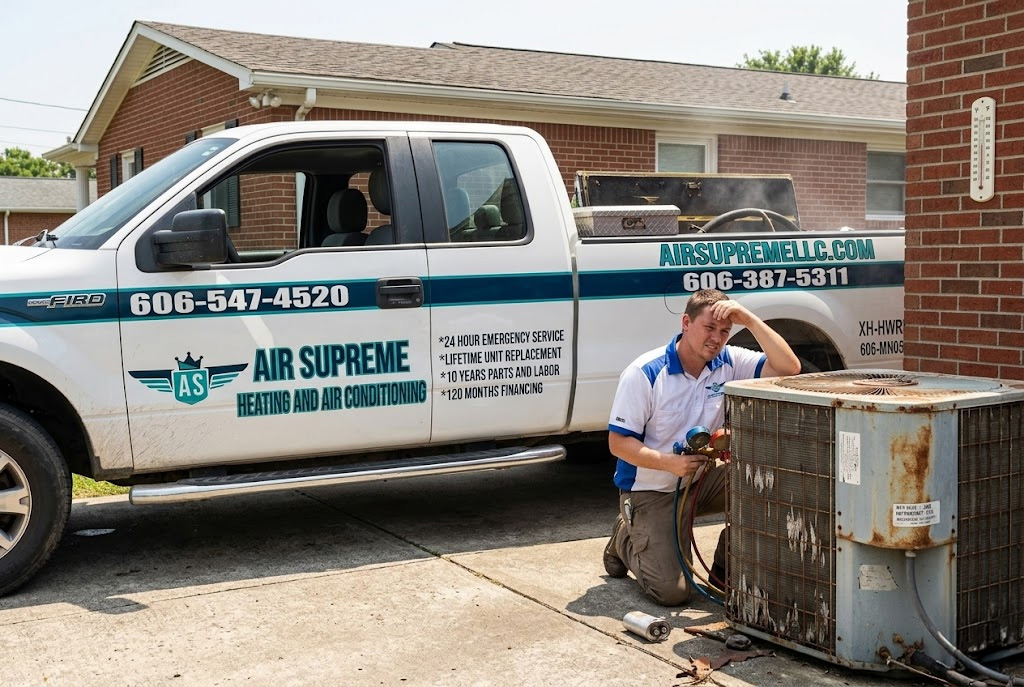
Your AC Is Constantly Running
An air conditioner should cycle on and off throughout the day, even during peak summer temperatures. If your system seems to run nonstop without properly cooling your home, it could mean your unit is losing efficiency or struggling to meet demand.
Older systems often experience worn components, reduced airflow, or failing compressors that make cooling harder and more expensive. If your energy bills are climbing while your comfort decreases, it may be time to consider an HVAC replacement.
Warm Air Is Coming From Your Vents
One of the clearest signs your AC may not survive another summer is warm or inconsistent airflow. You may notice certain rooms stay hot while others cool unevenly. This can point to serious issues such as:
- Compressor failure
- Refrigerant leaks
- Aging ductwork
- Failing blower motors
While some repairs can temporarily solve these problems, recurring issues usually indicate your system is nearing the end of its lifespan.
Frequent Repairs Are Adding Up
If you are repeatedly calling for AC repairs every summer, replacing your system may actually save you money. Investing in constant repairs for an aging unit can quickly become more expensive than upgrading to a modern, energy-efficient system.
At Air Supreme, we help homeowners compare repair costs versus replacement benefits so they can make confident decisions. New systems provide better cooling, quieter operation, and improved energy efficiency, lowering monthly utility costs.
Your System Is More Than 10–15 Years Old
Most air conditioning systems last between 10 and 15 years with proper maintenance. Once your unit reaches that range, efficiency naturally declines and the risk of breakdown increases.
Today’s HVAC systems are designed with advanced technology that delivers stronger performance while using less energy. Replacing an outdated system before it completely fails helps you avoid emergency replacement situations during peak summer demand.
Strange Noises or Odors Should Never Be Ignored
Grinding, rattling, buzzing, or musty odors coming from your AC system are warning signs that something is wrong internally. Electrical problems, mold buildup, failing motors, or loose parts can all lead to larger system failures if ignored.
When these warning signs appear consistently, replacement is often the smarter long-term solution.
Save More With HVAC Replacement Specials
At Air Supreme, we make upgrading your comfort affordable with free estimates, financing options, and valuable system savings. Depending on the system you choose, homeowners may qualify for discounts, including equipment upgrades or flexible monthly payment plans that make replacing your HVAC system easier on your budget.
Our experienced team will help you select the right cooling system for your home while maximizing your energy savings and long-term comfort.
Don’t wait until your AC fails during the hottest days of summer. Contact Air Supreme today to schedule your free estimate and learn about our current HVAC replacement offers.
Frequently Asked Questions
Question: How do I know if my AC needs to be replaced?
Answer: Common signs include constant running, warm or uneven airflow, rising energy bills, frequent repairs, strange noises, or unusual odors. These problems can indicate that the system is losing efficiency or nearing the end of its useful life.
Question: How long does an air conditioning system usually last?
Answer: Most air conditioning systems last about 10 to 15 years with proper maintenance. Once a system reaches this age range, efficiency may decline and the likelihood of breakdowns can increase.
Question: Should I repair or replace an older AC system?
Answer: Replacement may be more cost-effective when an older system requires frequent repairs or continues to perform poorly. Comparing repair costs with the benefits of a newer, more efficient system can help determine the better long-term option.
Question: Why is my AC running constantly but not cooling my home?
Answer: Constant operation with poor cooling can be caused by worn components, reduced airflow, compressor problems, or declining system efficiency. If the problem continues after repairs, HVAC replacement may be worth considering.
Question: What are the benefits of replacing an old air conditioner?
Answer: A newer HVAC system can provide more consistent cooling, quieter operation, and improved energy efficiency. Replacing an aging unit before it fails can also help avoid an unexpected breakdown during peak summer heat.